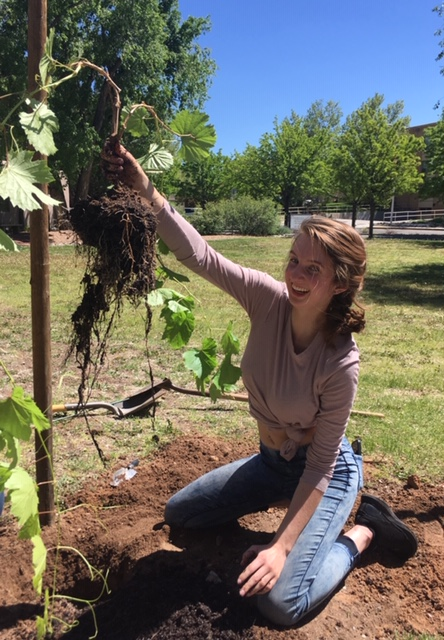
Our class took a walking tour through the rain on Valentine's Day to visit the Lobo Gardens around campus and to find a good place to transplant our newly sprouting vines when spring finally comes to New Mexico.
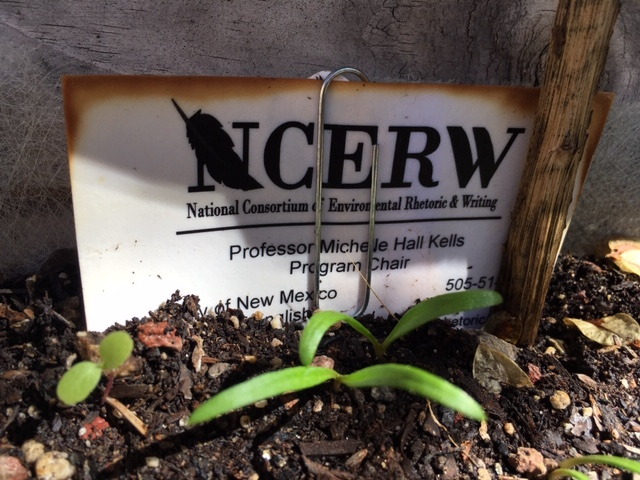
A pouring rain and new dill, arugula, sunflowers, chile peppers, and tomato sprouts graced us on Earth Day at the Lobo Gardens. We are in the final two weeks of the Spring Semester, completing our Writing About Wine & Food Blogs and websites, cultivating new seed beds, and preparing to transplant our vines from the UNM Greenhouse to the campus Lobo Gardens. For more information about EcoLiteracy at UNM see: https://unmecoliteracy.wordpress.com/ Culitivating environmental citizenship across communities For more information about the National Consortium of Environmental Rhetoric and Writing see: https://sites.google.com/site/ncenvirorhetoric/
Dr. Gill Giese, NMSU Extension Viticulture Specialist, of the Los Lunas Agricultural Science Center, graciously joined our class on Thursday, January 24th at the University of New Mexico Biology Greenhouse to help us plant grape root stock. After a brief lecture on planting, grafting, and pruning, we got our hands dirty planting a dozen vines including Tempranillo, Petit Verdot, and Malvasia varietals proven to thrive in New Mexico.



Comments
Post a Comment